
Stop Using Radial Devices for Calcific Tendonitis
Calcific Tendonitis, Shockwave Therapy, Pain Management
Stop Treating Calcific Tendonitis with Radial Devices: Here’s Why
When it comes to supraspinatus Calcific Tendonitis, the physics of energy delivery matters more than marketing labels on devices.
Many clinics still default to radial devices for “shockwave” because they’re cheaper, heavily marketed, and easier to use. But when you’re dealing with calcific deposits in the supraspinatus tendon, that choice can be the difference between a patient who finally sleeps through the night and one who bounces from provider to provider, stuck in a cycle of partial relief and recurring pain.
📌 Key Takeaway: If you’re treating deep tendon calcifications with a device designed for superficial tissue, you’re fighting physics—not the pathology.
The Physics Problem: Radial Waves Diverge
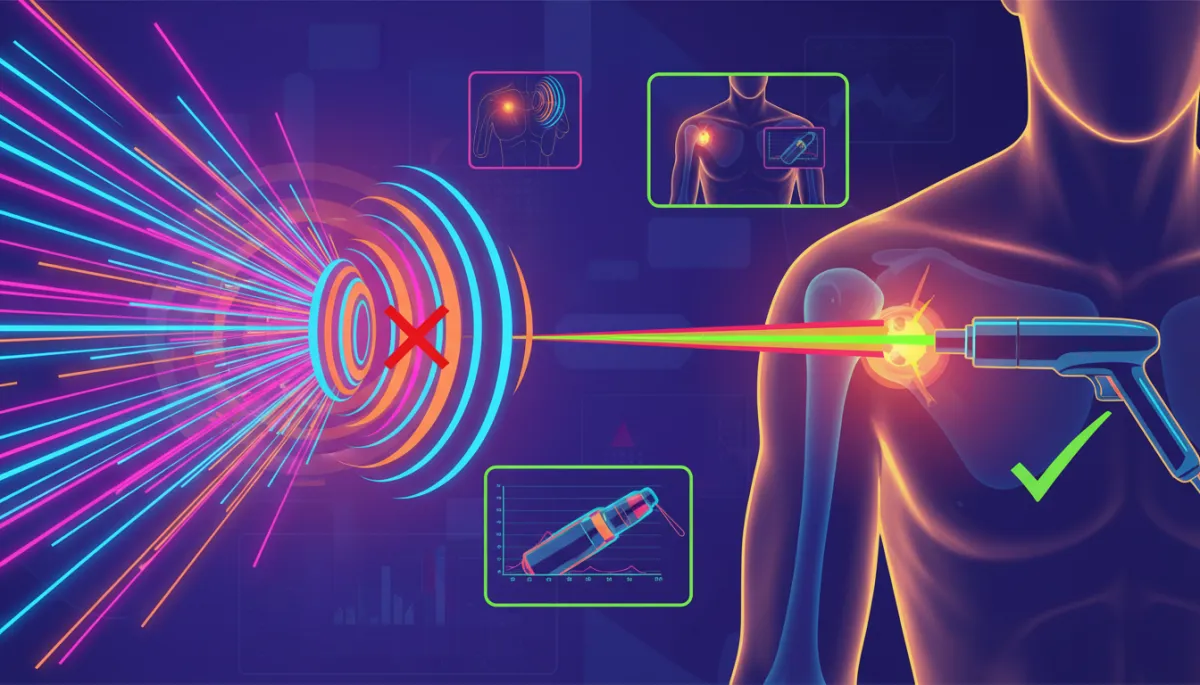
Radial Pressure Wave devices generate low‑energy waves that spread outward from the applicator. By design, these waves diverge: energy density drops rapidly with depth and distance. Superficial myofascial pain may respond, but deep supraspinatus calcifications typically sit 2–4 cm beneath soft tissue and bone. At that depth, a radial wave has lost much of its therapeutic power, making it a poor choice for targeted calcific deposit disruption.
Think of a radial device like tossing a stone into a pond. The ripples move outward, but they become weaker the farther they travel from the point of impact. By the time those ripples reach the far edge, they’re barely noticeable. That’s exactly what happens when you try to use radial waves to reach a deeply seated calcific focus in the supraspinatus: the tissue you actually need to affect is on the far edge of the ripple pattern.
Rapid energy decay: Energy density falls off quickly with distance from the applicator tip.
Poor depth control: You cannot reliably target a structure 2–4 cm deep while sparing superficial tissue.
Non‑specific stimulation: Much of the delivered energy is “wasted” in skin, subcutaneous fat, and superficial muscle.
“If the wave can’t reach the calcification at therapeutic intensity, it doesn’t matter how many sessions you sell—the physics will always limit the clinical outcome.”
Clinically, this shows up as modest short‑term pain relief from superficial neuromodulation and improved blood flow, but little to no structural change in the calcific deposit itself. Patients may feel “looser” or “less sore” for a few days, only to have night pain, painful arcs, and overhead limitations return.
💡 Pro Tip: If your patient’s pain consistently returns within days after radial treatment, it’s a sign you’re not altering the underlying calcific lesion—only modulating symptoms.
Focused Shockwave: The Sniper Rifle of Shoulder Care
In contrast, a HyperWave Focused Shockwave (FSW) system concentrates acoustic energy at a specific focal point and depth. Instead of a “Shotgun” pattern, FSW acts like a “Sniper Rifle”: high‑energy, precisely aimed, and capable of reaching the calcific deposit within the supraspinatus tendon while sparing surrounding tissues. This focused energy is what promotes mechanical fragmentation, accelerated resorption, and superior outcomes in Focused Shockwave Therapy for Calcific Tendonitis and evidence‑based Pain Management.
With FSW, you can dial in the focal depth to match the location of the deposit seen on ultrasound or X‑ray. Energy is highest exactly where you need it and falls off sharply beyond the focal zone. The result is a treatment that can:
Deliver therapeutic energy directly into the calcific mass rather than dissipating superficially.
Trigger micro‑fragmentation of the deposit, making it easier for the body to resorb.
Stimulate neovascularization and tissue regeneration in the tendon itself.
This is why high‑quality clinical trials on Calcific Tendonitis overwhelmingly use focused shockwave parameters, not radial pressure waves. When the goal is to remodel a pathologic structure located beneath layers of tissue, precision energy delivery is non‑negotiable.
📌 Key Takeaway: For supraspinatus calcifications, focused shockwave isn’t a “premium upgrade”—it’s the only modality that meaningfully aligns with the underlying biomechanics and anatomy.
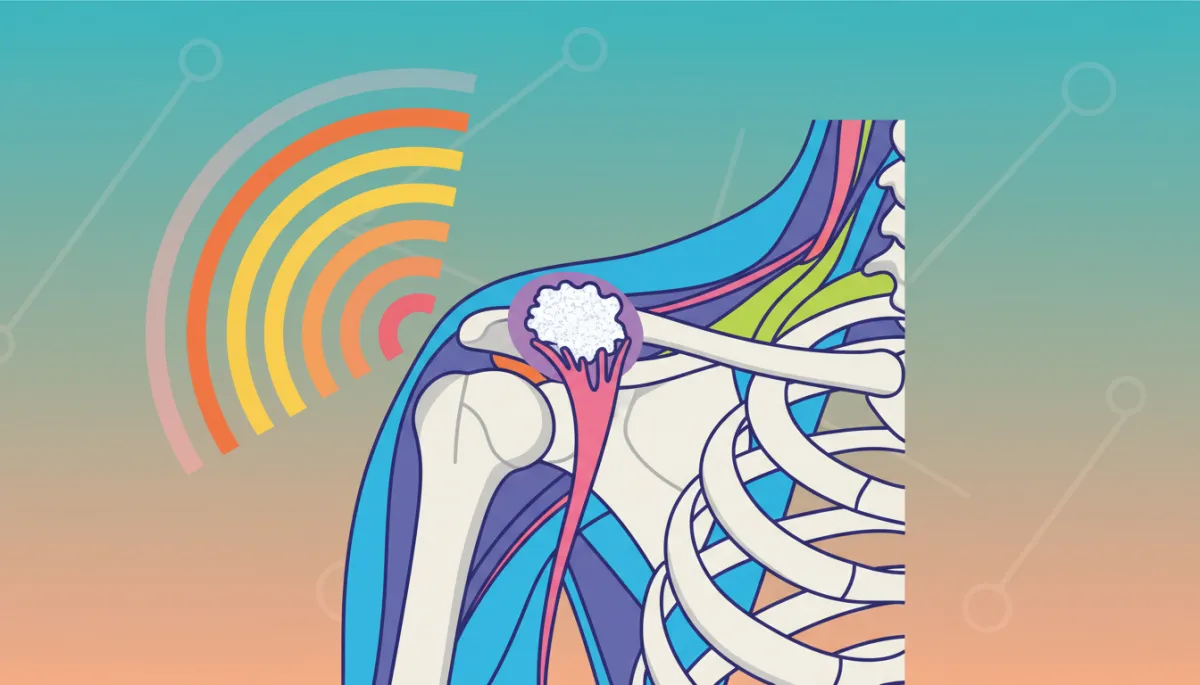
Divergent radial waves dissipate before meaningfully impacting deep calcific deposits.
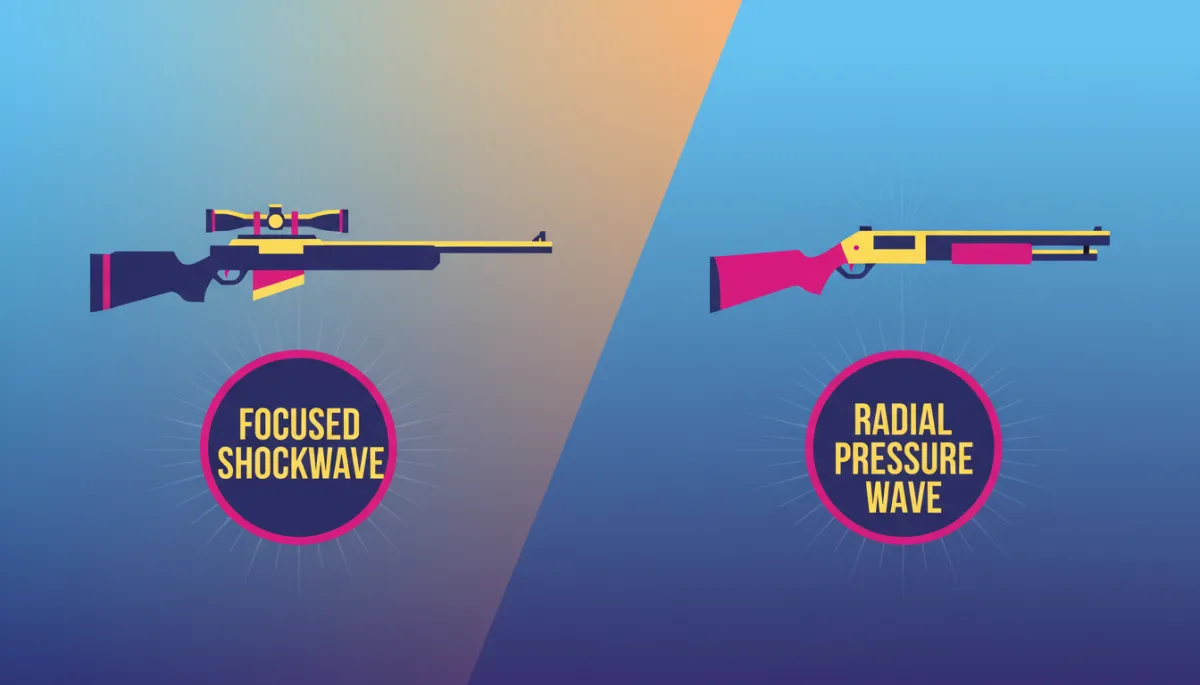
For supraspinatus treatment, clinicians need sniper‑level precision, not shotgun‑like energy spread.
Clinical Red Flags: When Radial Devices Are Holding You Back
If you’re currently using radial devices for Calcific Tendonitis, you’ll likely recognize some of these patterns in your practice:
Patients report temporary relief but symptoms return with overhead activity or at night.
You need multiple treatment blocks to achieve modest improvements in pain and function.
Follow‑up imaging often shows little change in deposit size or morphology.
These are not simply “tough cases.” They are predictable consequences of using a technology that was never designed to deliver high‑energy, focal treatment to a deep tendon pathology. Upgrading to focused shockwave often turns these frustrating cases into some of your most satisfying clinical wins.
💡 Pro Tip: Reserve radial devices for what they do best—superficial myofascial pain, trigger points, and tendinopathies near the surface—while using focused systems for deep calcific lesions.
Making Evidence‑Based Equipment Decisions
Device manufacturers often blur the line between radial pressure waves and true focused shockwaves in their marketing. As a clinician, your responsibility is to look past buzzwords and evaluate:
The waveform characteristics (pressure profile, rise time, and peak pressure).
The focal depth and energy flux density achievable at the target tissue.
The quality of published evidence for that specific device type in Calcific Tendonitis.
When you align your technology with the physics of the pathology, you don’t just get better outcomes—you also build a more trustworthy, referral‑worthy practice. Patients can feel the difference between a treatment that merely “does something” and one that is clearly designed to solve their specific problem.
In the long run, investing in focused shockwave is less about owning a premium device and more about delivering premium results.
The Bottom Line for Shoulder Specialists
Supraspinatus Calcific Tendonitis is a deep, structurally driven problem. Treating it with a superficial, divergent energy source is fundamentally mismatched care. By choosing focused shockwave over radial devices for these cases, you’re not just upgrading equipment—you’re aligning your practice with the core physics that govern therapeutic success.
For patients, that can mean faster pain relief, fewer sleepless nights, and a genuine return to overhead activity. For clinicians, it means more predictable outcomes, stronger word‑of‑mouth, and the confidence that your technology is finally working with you, not against you.
📌 Key Takeaway: Stop asking radial devices to do a focused shockwave’s job. For calcific deposits in the supraspinatus, choose sniper‑level precision over shotgun‑style energy spread every time.