
Shockwave Therapy: Fact or Fiction for Tissue Regeneration?
Focused Shockwave Therapy, Tissue Regeneration, Myth-busting, Research Evidence, Pain Management, HyperWave
Does Focused Shockwave Therapy Actually Regenerate Tissue—or Is That Hype?
If you live with stubborn pain, you’ve probably seen bold claims that focused shockwave therapy can “regrow” tendons, cartilage, or even nerves. In this friendly myth-busting guide, we’ll look at what the latest research actually says about tissue regeneration, pain relief, and what realistic expectations should look like for real people—not lab rats.
Myth-Busting: “Focused Shockwave Therapy Regrows Any Damaged Tissue”
Let’s start with the biggest myth: that focused shockwave therapy is a magic wand that fully regenerates any damaged tissue. That’s not what the science shows. What research does suggest is that extracorporeal focused shockwave therapy can stimulate healing processes in certain tissues and improve pain and function in specific conditions—sometimes impressively, sometimes only modestly, and sometimes not at all.
💡 Myth-busting takeaway: Focused shockwave therapy is a helpful tool for some problems, not an all-purpose tissue-regeneration cure.
How Focused Shockwave Therapy May Support Tissue Regeneration
Focused Shockwave like HyperWave uses high-energy sound waves delivered from outside the body to targeted areas. In lab and animal studies, these waves can trigger a cascade of biological responses that support Tissue Regeneration and repair:
Increased blood flow and formation of new blood vessels (neovascularization)
Release of growth factors that encourage tissue healing and remodeling
Changes in pain-signaling pathways that can reduce pain perception
For example, a 2026 study in the Annals of the New York Academy of Sciences found that therapies like HyperWave focused shockwave helped peripheral nerve regeneration by activating an ERK1/2-mediated autophagy pathway in both cell and animal models. That’s a fancy way of saying the treatment nudged nerve cells into a “cleanup and repair” mode that supports regeneration.
Another 2026 paper in Frontiers in Bioengineering and Biotechnology showed that focused shockwave therapy like HyperWave could reduce degeneration in the cartilaginous endplate of the spine by influencing the SOST/Wnt/β-catenin pathway, which is important for cartilage health. These mechanisms are promising, but they don’t automatically translate into dramatic, guaranteed results for every human patient.
Where Research Evidence Is Stronger—and Where It’s Weaker
When we talk about Research Evidence, it helps to separate conditions where focused shockwave therapy is better supported from those where the hype is ahead of the data.
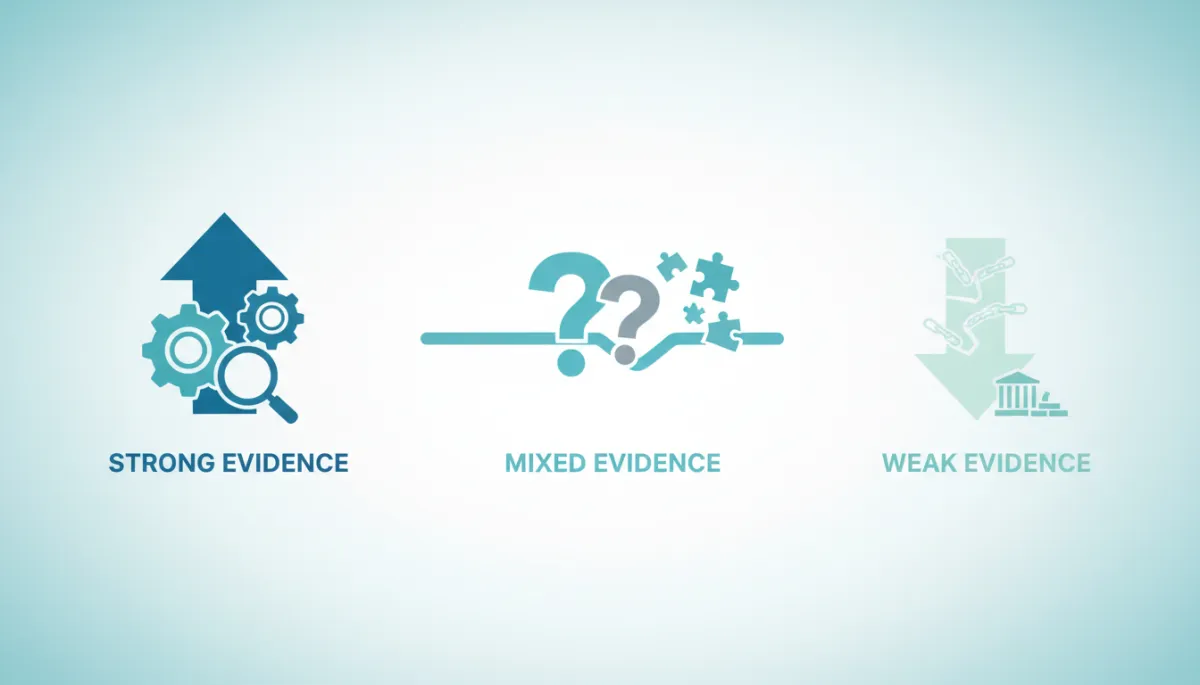
Evidence for focused shockwave therapy varies widely by condition and treatment goal.
Conditions with Encouraging Results
Tendinopathies and musculoskeletal pain: A 2026 meta-analysis in Scientific Reports found both radial and focused shockwave therapy helped reduce pain and improve function in various tendinopathies, supporting its role in Pain Management. However, results differ by tendon and study quality.
Chronic low back pain: A 2026 network meta-analysis showed the best outcomes when therapies like HyperWave focused shockwave was combined with conventional physical therapy, suggesting a helpful “booster” effect rather than a stand-alone cure.
Bone-related issues: A systematic review in the Clinical Journal of Sport Medicine reported that for some bone conditions, focused shockwave therapy performed similarly to surgery or medication, with a good safety profile.
Areas Where Hype Outruns the Data
“Total regeneration” claims: No high-quality human trials show complete regrowth of severely damaged tendons, cartilage, or nerves back to a brand-new state.
📌 Key point: Focused shockwave therapy can support healing and reduce pain in some conditions, but it’s not a guaranteed tissue-regeneration fix for everything.
Setting Realistic Expectations: What It Can (and Can’t) Do
When you’re in pain, it’s tempting to hope for a one-and-done solution. Realistically, focused shockwave therapy usually fits into a broader Pain Management and rehab plan. Here’s what many people can reasonably expect, based on current evidence:
Gradual improvements, not overnight miracles: Benefits often build over several sessions and weeks, especially when combined with exercise or physical therapy.
Better function and less pain, not necessarily “perfect” tissue: You may move more easily and hurt less even if imaging still shows some changes in the tissue.
Variable results: Some people respond very well; others see only mild or no benefit. Your specific diagnosis, overall health, and activity level all matter.
In short, aim for Realistic Expectations: Focused shockwave therapy can be a valuable, evidence-informed option for certain types of pain and possible tissue support, but it is rarely a stand-alone cure.
Why Talking to a Qualified Provider Matters So Much
Because the evidence is mixed and protocol-sensitive, the importance of talking to a provider can’t be overstated. A clinician who understands focused shockwave therapy and current research can:
Confirm whether your diagnosis is actually likely to respond to treatment
Choose appropriate settings (radial vs. focused, energy levels, number of sessions)
Integrate focused shockwave therapy with exercise, manual therapy, or other modalities for better outcomes
Explain the likely benefits, risks, and costs in your specific situation
💬 Friendly reminder: Online information is a starting point, not a substitute for a personalized assessment from a licensed provider who knows your medical history.
Want to Dive Deeper into the Research Evidence?
If you enjoy looking under the hood, it’s worth exploring the actual studies behind the headlines. Systematic reviews and meta-analyses from journals like Scientific Reports, Frontiers in Physiology, and the Clinical Journal of Sport Medicine summarize dozens of trials on topics ranging from tendinopathies to chronic low back pain and bone healing.
To see a curated, easy-to-understand overview of current data, visit our Research page where we break down key findings, discuss tissue regeneration mechanisms, and update you as new 2026 and beyond studies are published.
The Bottom Line: Hope, with a Healthy Dose of Due Diligence
So, does focused shockwave therapy actually regenerate tissue? In some contexts, it appears to support tissue repair and remodeling and can meaningfully reduce pain and improve function. But the idea that it reliably “grows back” any damaged structure is an oversimplification—and sometimes pure hype.
If you’re considering HyperWave focused shockwave therapy, pair the hopeful science with clear-eyed expectations: talk to a knowledgeable provider, understand the evidence for your condition, and think of the treatment as one helpful tool in a bigger Pain Management and rehabilitation strategy. That’s where the real, sustainable wins tend to happen.