
Quick Answer: Sessions for Knee Pain Relief
HyperWave shockwave Therapy, Knee Pain Relief
Quick Answer: How Many HyperWave Sessions for Knee Pain?
You want a clear idea of how many HyperWave shockwave sessions your knee might need, without the noise. This guide keeps it simple, while reminding you that every knee — and every body — heals at its own pace.
The Short Answer: A Typical Range
Most people with knee pain receive between 3 and 8 HyperWave sessions, usually spaced about a week apart. Some feel better after just a few visits. Others need a longer series to see steady, lasting change.
This range is a starting point, not a promise. The exact number depends on your knee, your lifestyle, and the type of technology used — including whether your clinic uses EMF-focused systems like HyperWave.
What Actually Decides Your Number of Sessions?
Cause of your knee pain – Degenerative wear, tendon irritation, old sports injuries, or post-surgical pain all respond differently. Chronic, long-standing pain often needs more sessions than a recent flare-up.
Severity and duration – The longer your knee has hurt, and the more it limits your walking, stairs, or sleep, the more time your tissues usually need to respond to shockwave.
Type of shockwave system – Radial, focused, and EMF-enhanced systems deliver energy in different ways. Settings such as intensity, frequency, and number of pulses per session also shape your treatment plan.
Your overall health – Circulation, inflammation levels, weight, and activity all affect how quickly your knee responds. Healthier tissue often adapts faster, but even complex cases can improve with the right plan.
What you do between sessions – Simple exercises, load management, and recovery routines can amplify the effects of each treatment and sometimes reduce how many sessions you need.
How Patients Usually Notice Changes
Change with HyperWave is often gradual, not dramatic. Many patients describe a pattern rather than a single turning point.
After the first 1–2 sessions, some people feel mild soreness, similar to a workout, followed by a subtle easing of stiffness or morning pain.
By around session 3–4, many notice walking feels smoother, stairs are less sharp, or they can stand a bit longer without thinking about their knee every second.
Over 6–8 sessions and the weeks that follow, improvements often consolidate: less swelling, fewer flare-ups, and more confidence in everyday movement.
A key detail: healing continues between sessions. Your body is doing the real work — shockwave is a signal that nudges tissue to repair, remodel, and calm persistent pain patterns over time.
💡 Quiet check-in: Notice small wins — fewer pain spikes, easier steps, or better sleep. These subtle shifts often appear before big changes in your daily routine.
Where HyperWave Fits: EMF‑Focused Shockwave Therapy
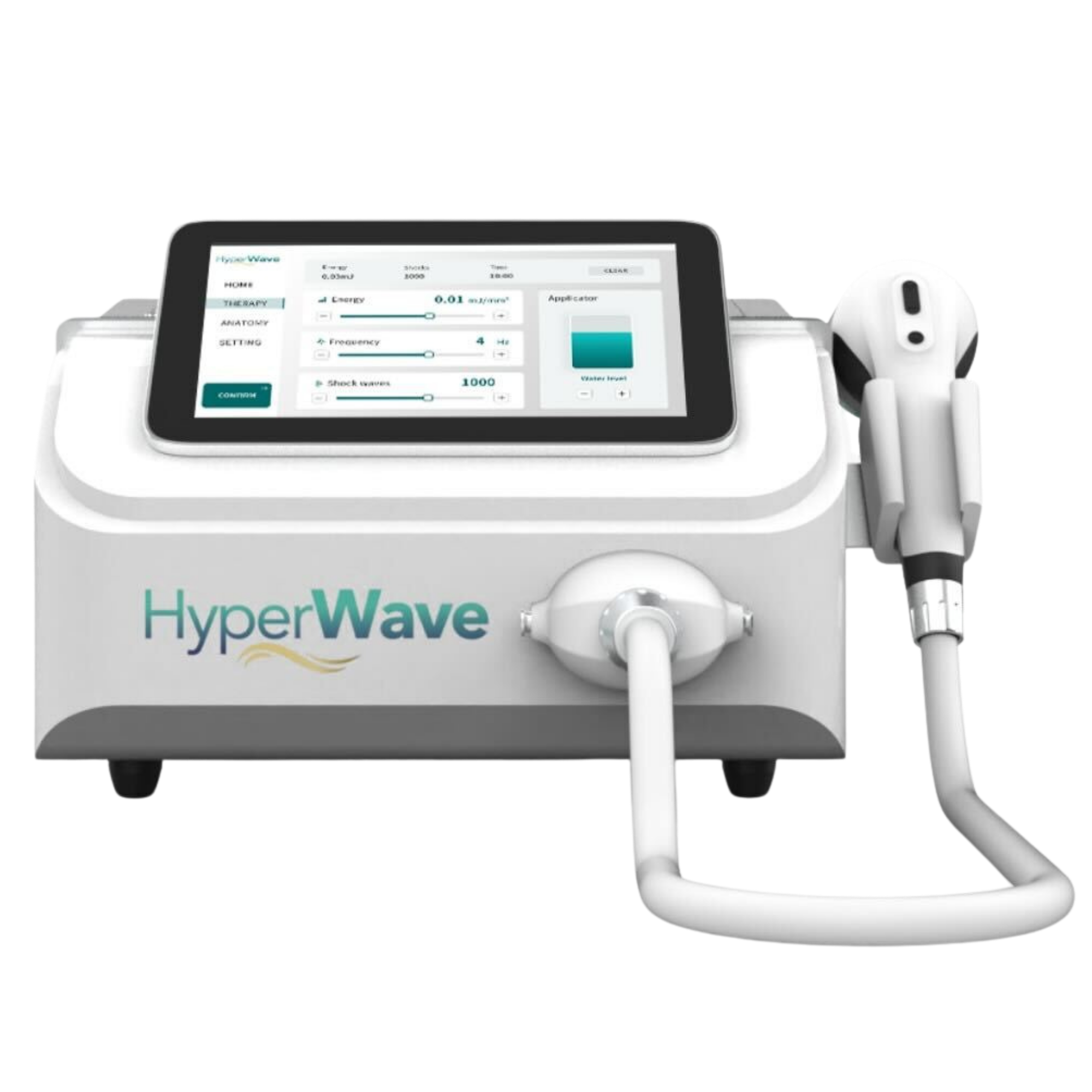
HyperWave sits within a newer class of EMF-focused shockwave systems. Instead of relying only on mechanical pressure waves, HyperWave pairs them with carefully tuned electromagnetic fields designed to influence how cells communicate and respond to stress.
In practice, this means your clinician can adjust both the energy delivered to the knee and the EMF profile around the joint. The goal is simple: support healing signals while calming persistent pain pathways. For some patients, this may help tissues respond more efficiently, potentially shaping how many sessions are recommended, and how quickly relief is felt.
HyperWave does not replace fundamentals like load management, strength work, and good sleep. Instead, it slots into a broader, EMF-aware approach to shockwave therapy that aims to be precise, targeted, and gentle on surrounding tissues.
A Clear Reminder: Results Always Vary
No clinic — and no device — can guarantee the same outcome for every knee. Age, biology, previous surgeries, medications, and daily habits all shape your response to shockwave, whether or not HyperWave technology is involved.
Some patients experience meaningful relief within a few weeks. Others notice only partial change, or need to combine HyperWave with other therapies to reach their goals. Your experience is valid, even if it does not match someone else’s story.
Why You Still Need a Personalized Plan
Online estimates are useful, but they are still guesses. The most accurate way to know how many shockwave sessions your knee may need is to sit down with a qualified clinic that understands approaches like HyperWave.
During a consultation, your provider can:
Review your history, imaging, and previous treatments
Examine how your knee moves, loads, and reacts to touch
Decide whether standard or HyperWave shockwave is appropriate
Outline a realistic session range and review points to track progress
If knee pain is shaping your day-to-day choices, consider booking a visit with a clinic experienced in HyperWave. A calm, honest assessment will give you something more valuable than a generic number: a clear, personalized plan for your own knee.