
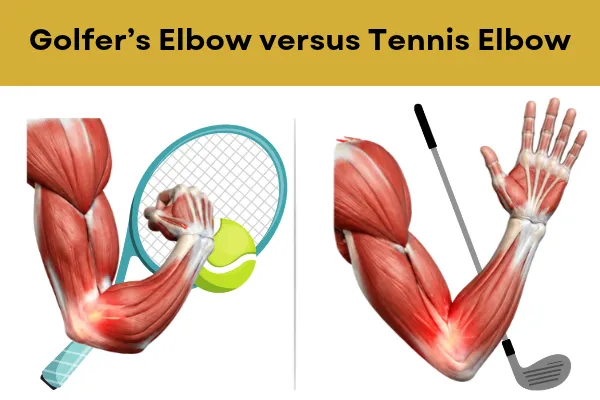
Golfer's Elbow vs. Tennis Elbow: Key Differences
Health, Golfer's Elbow, Tennis Elbow, Elbow Pain
Golfer’s Elbow vs. Tennis Elbow: What’s the Difference?
If you’ve ever felt a nagging ache on either side of your elbow and wondered whether it’s Golfer’s Elbow or Tennis Elbow, you’re not alone. Both are common causes of elbow pain and both are types of repetitive strain injury, but they’re not the same thing. Understanding the difference can help you get the right diagnosis, the right treatment, and get back to the activities you love—without wincing every time you grip, lift, or swing.
The Big Picture: Two Sides of the Same Elbow Story
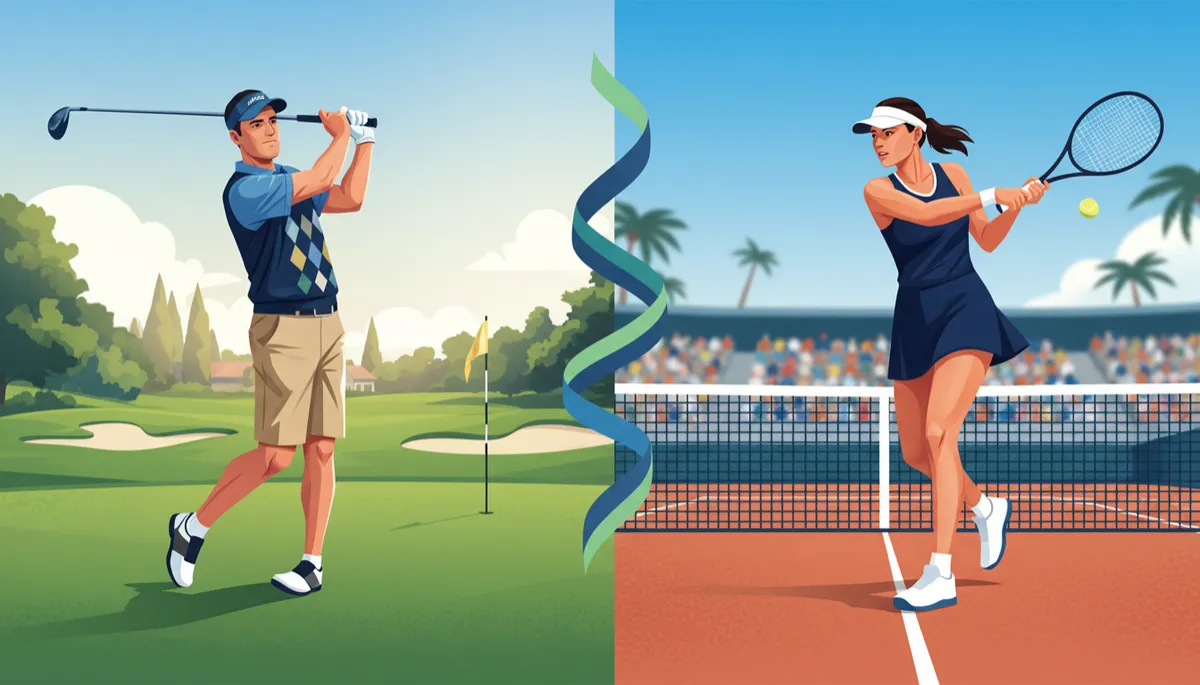
Golfer’s Elbow and Tennis Elbow are both overuse injuries that affect the tendons around the elbow. They’re usually caused by repeated gripping, lifting, or wrist movements—on the court, at the gym, at work, or even doing chores at home. In medical terms, they’re both forms of tendinopathy, where the tendon tissue becomes irritated and painful over time rather than from a single dramatic injury.
The main difference? Location and movement. Golfer’s Elbow, also known as medial epicondylitis, affects the inside of your elbow. Tennis Elbow affects the outside. The side that hurts usually points to which condition you’re dealing with—but there’s more to the story than just where it aches.
What Is Golfer’s Elbow (Medial Epicondylitis)?
Despite the name, you don’t have to play a single round of golf to develop Golfer’s Elbow. Medically called medial epicondylitis, this condition affects the tendons that attach to the bony bump on the inside of your elbow, called the medial epicondyle. These tendons help you flex your wrist and fingers and grip objects firmly.
Where you feel it: Pain and tenderness on the inside of the elbow, sometimes radiating down the forearm toward the wrist.
What makes it worse: Gripping, squeezing, flexing the wrist, turning a doorknob, or lifting a heavy bag with your palm facing up.
Common triggers: Golf, baseball pitching, weightlifting (especially curls), manual labor, and even long hours of typing or mouse use.
Over time, repeated stress on these tendons can lead to tiny microtears and degeneration. Your body tries to repair the area, but if the strain continues, that healing process can’t keep up. That’s when Golfer’s Elbow turns from a minor annoyance into a persistent, activity-limiting problem.
What Is Tennis Elbow?
Tennis Elbow, or lateral epicondylitis, affects the tendons on the outside of the elbow. These tendons attach to the lateral epicondyle and help extend your wrist and fingers. Just like Golfer’s Elbow, Tennis Elbow is usually the result of a repetitive strain injury, not one sudden accident.
Where you feel it: Pain and tenderness on the outside of the elbow, sometimes traveling down the back of the forearm.
What makes it worse: Lifting with your palm facing down, shaking hands, turning a key, or pouring from a heavy kettle.
Common triggers: Tennis (especially backhand strokes), racquet sports, painting, carpentry, and repetitive tool use.
Because both conditions cause similar elbow pain and both are linked to overuse, they’re often confused. The key distinction is simple: inside = Golfer’s Elbow, outside = Tennis Elbow.
Shared Symptoms: How Repetitive Strain Shows Up
Even though Golfer’s Elbow and Tennis Elbow affect different sides of the joint, they share a lot of common symptoms because both are repetitive strain injuries of the tendons. You might notice:
A dull ache or sharp twinge around the elbow when you use your hand or wrist.
Stiffness, especially first thing in the morning or after activity.
Weakened grip—dropping objects, struggling to open jars, or feeling “weak” when lifting.
Discomfort that flares with certain motions but may ease with rest.
💡 Friendly tip: If your elbow pain has lasted more than a few weeks, or keeps coming back when you resume activity, it’s worth getting it checked. Early treatment makes recovery easier and faster.
How Are Golfer’s Elbow and Tennis Elbow Diagnosed?
A healthcare professional—often a sports medicine doctor, physical therapist, or chiropractor—will usually start with a detailed history and a hands-on exam. They’ll ask where your elbow pain started, what activities you do, and which movements make things worse. Then they’ll gently press around the elbow and have you move your wrist and fingers against resistance to pinpoint which tendons are irritated.
Imaging like X-rays or ultrasound is sometimes used to rule out other issues, but most cases of Golfer’s Elbow and Tennis Elbow can be diagnosed clinically. The goal is to confirm that your symptoms really are from a repetitive strain injury of the tendons and not from something like a fracture, arthritis, or nerve compression.
Everyday Treatment Options: Rest, Stretch, Strengthen
The good news is that most cases of Golfer’s Elbow and Tennis Elbow improve with a combination of self-care and targeted treatment. Common approaches include:
Activity modification: Temporarily reducing or changing the movements that trigger your elbow pain, such as adjusting your grip, using lighter equipment, or taking breaks from repetitive tasks.
Ice and short-term pain relief: Using ice packs and, when appropriate, over-the-counter anti-inflammatories to help manage symptoms in the short term (always follow your provider’s guidance).
Bracing or taping: Using a forearm strap or taping techniques to offload stress from the irritated tendon while it heals.
Stretching and strengthening: Gentle stretches and progressive loading exercises to restore flexibility and build resilient forearm muscles and tendons.
While these strategies are important, some people find that their symptoms linger despite doing “all the right things.” That’s where more advanced, but still non-invasive, options can make a real difference.
HyperWave Focused Shockwave: A Modern, Non-Invasive Option
One promising treatment for stubborn Golfer’s Elbow and Tennis Elbow is Shockwave Therapy, and specifically, HyperWave focused shockwave. This technology uses targeted acoustic waves to stimulate healing in the damaged tendon tissue—without needles, surgery, or medication injections.
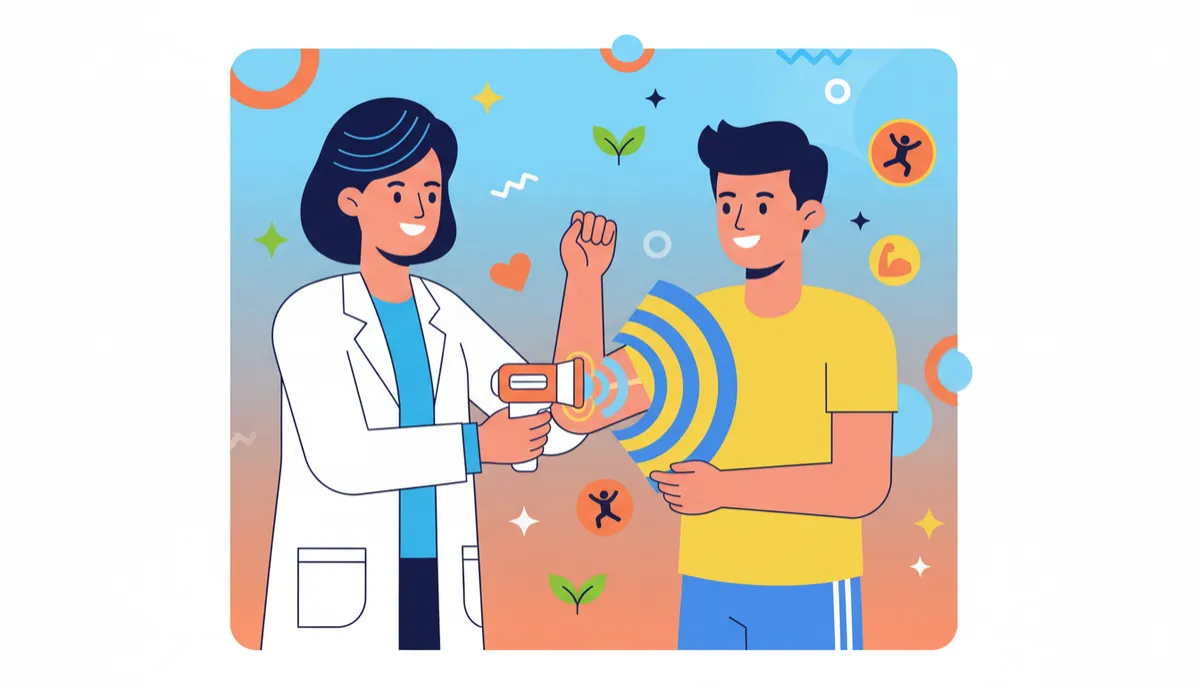
Focused shockwave targets the injured tendon to kick-start natural healing.
With HyperWave, a practitioner directs these focused waves precisely at the area of medial epicondylitis in Golfer’s Elbow or at the outer tendon in Tennis Elbow. The goal is to:
Increase local blood flow and metabolism in the tendon tissue.
Break up disorganized scar tissue and stimulate a more effective healing response.
Reduce pain by influencing nerve activity in the treated area.
Sessions are typically quick, and while you may feel some tapping or mild discomfort during treatment, most people tolerate it well. Because HyperWave focused shockwave is non-invasive, there’s no downtime—you can usually return to your normal daily activities right away, with guidance on how to gradually reintroduce sports or heavier tasks.
💡 Friendly tip: Shockwave Therapy works best as part of a complete plan that may include stretching, strengthening, and activity changes. Think of HyperWave as a powerful boost to your body’s own healing, not a magic wand on its own.
Preventing Future Flare-Ups: Protecting Your Elbows Long-Term
Once your elbow pain starts to settle—whether from rest, rehab exercises, HyperWave Shockwave Therapy, or a combination—it’s worth investing a little time in prevention. After all, no one wants to keep cycling through the same painful pattern.
Tune up your technique: In sports like golf and tennis, small changes in swing mechanics can dramatically reduce stress on your elbows. A coach or trainer can help refine your form.
Strengthen your forearms and shoulders: Building strength in the muscles that support your elbow spreads the workload and makes tendons more resilient to repetitive strain injury.
Take regular breaks: Whether you’re at a desk, on a job site, or on the court, short breaks to stretch and shake out your arms can prevent overuse from building up silently.
Listen to early warning signs: Mild, occasional soreness is your body’s way of asking for a change in routine. Addressing it early can stop Golfer’s Elbow or Tennis Elbow from becoming a chronic issue.
When to Seek Help—and What to Ask
If you’re unsure whether your symptoms point to Golfer’s Elbow or Tennis Elbow, or if home care hasn’t made a meaningful difference, it’s a good time to connect with a professional. Ask about:
Whether your pain pattern matches medial epicondylitis (inside elbow) or lateral epicondylitis (outside elbow).
A personalized exercise program to restore strength and flexibility without aggravating your symptoms.
Non-invasive options like HyperWave focused Shockwave Therapy if your pain has become persistent or keeps returning.
The goal isn’t just to quiet the pain temporarily—it’s to address the underlying tendon health so you can swing, lift, type, and live confidently again.
The Bottom Line: Two Conditions, One Clear Next Step
Golfer’s Elbow and Tennis Elbow may sound like sports-specific problems, but they’re really about how everyday movements affect your tendons over time. Golfer’s Elbow targets the inside of the elbow and is often called medial epicondylitis, while Tennis Elbow affects the outside. Both are forms of repetitive strain injury, and both can make simple tasks surprisingly painful.
The encouraging news is that you have options. From smart activity changes and strengthening exercises to advanced, non-invasive treatments like HyperWave focused Shockwave Therapy, there are many ways to support your body’s natural healing and get lasting relief from elbow pain. If your symptoms are holding you back, consider reaching out to a provider who can help you pinpoint the cause, tailor a plan, and guide you back to the activities you enjoy—with stronger, happier elbows.