
Shockwave Therapy for Arthrodesis Non-Unions: What a 2020 Study Suggests
Shockwave Therapy for Arthrodesis Non-Unions: What a 2020 Study Suggests
When a joint is fused on purpose (an arthrodesis), the goal is simple: create a solid, pain-reducing union between bones.
But sometimes fusion doesn’t “take.” The bones fail to knit together, leading to an arthrodesis non-union—often with ongoing pain, limited function, and the frustrating possibility of revision surgery (and sometimes re-revision surgery).
A 2020 study looked at whether focused extracorporeal shock wave therapy (fESWT) could be a conservative option for certain arthrodesis non-unions—especially for patients where additional surgery carries higher risk.
Here’s the breakdown of what they found.
First: what is an arthrodesis non-union?
An arthrodesis is a surgical fusion of a joint (commonly in the hand or foot/ankle) to reduce pain and improve stability.
A non-union means the fusion site doesn’t heal into a solid bony bridge within an expected timeframe. Clinically, that can mean:
Persistent pain at the fusion site
Ongoing swelling or tenderness
Difficulty bearing weight (for foot/ankle fusions)
Imaging that shows incomplete healing
Standard treatment often involves revision surgery, but outcomes can be variable and risks increase in patients with other medical conditions.
Why shockwave therapy is being explored here
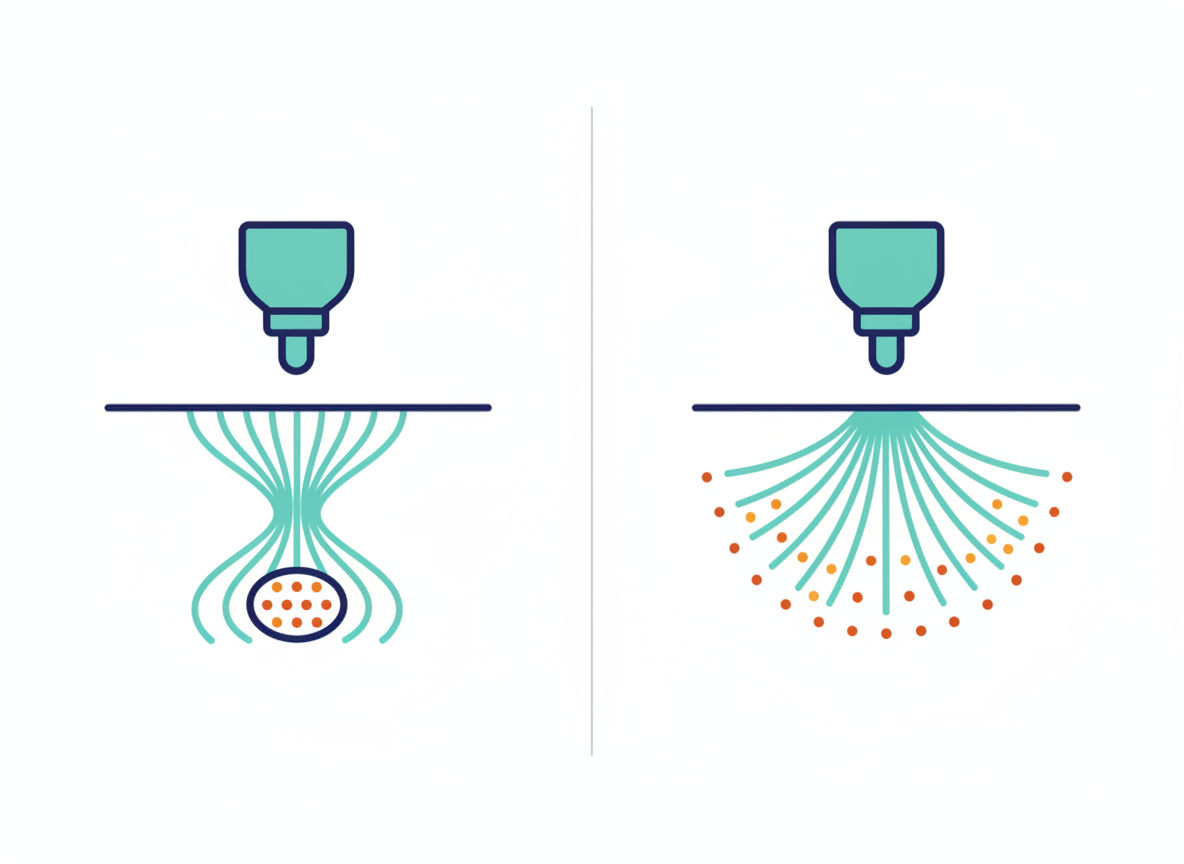
Focused ESWT, including HyperWave, is a non-invasive mechanical stimulus that can be targeted to a specific depth and location.
In orthopedics, it’s been studied for conditions where the body needs a “healing signal”—including tendinopathies and certain bone-healing problems. The idea is that a high-energy focused stimulus may help trigger biological responses involved in repair.

The study at a glance
This was a retrospective, single-center study (so: not randomized, not controlled), designed to provide early evidence on:
Union rates (did the arthrodesis heal?)
Pain course over time
Who was included?
The study included 25 patients with non-union after arthrodesis.
24 patients were available for follow-up.
What treatment did they receive?
Patients received one session of focused ESWT with the following parameters:
Energy flux density: 0.36 mJ/mm²
Impulses: 3000
Frequency: 4 Hz
(Also reported: 23 kV)
How were outcomes tracked?
Patients were assessed at:
6 weeks
12 weeks
24 weeks
Using:
Radiographic results (imaging evidence of union)
Clinical results
Pain scores on a visual analogue scale (VAS)
What they found
1) Healing rates depended heavily on the body region
At 24 weeks, union rates varied by arthrodesis location:
Hand arthrodeses:80% healed
Upper ankle:50% healed
Subtalar joint:27.2% healed
Midfoot:0% healed
So the biggest “signal” here is that shockwave outcomes were not uniform across joints. In this dataset, the hand did best.
2) Pain improved over time
Pain decreased significantly over the follow-up period:
Baseline: 4.8 (± 2.8)
6 weeks: 3.4 (± 2.3)
12 weeks: 2.9 (± 2.5)
24 weeks: 2.4 (± 2.8)
The change was statistically significant (p < 0.0001).
What this means (and what it doesn’t)
This study supports a practical, patient-centered takeaway:
Focused ESWT may be worth considering as a conservative option for pain relief, and it may support healing in some arthrodesis non-unions—particularly in the hand.
But it’s also important to keep expectations grounded:
This was retrospective and single-center (no control group)
The sample size was small
Outcomes varied a lot depending on the joint
In other words: promising early evidence, not a universal solution.
The HyperWave takeaway
If a patient is facing an arthrodesis non-union—especially if they’re a poor candidate for repeat surgery—this paper adds to the conversation about non-invasive options.
The most compelling signals from this study:
Meaningful pain reduction over 24 weeks after a single focused ESWT session
Higher union rates in hand arthrodesis non-unions compared with foot/midfoot regions
Full citation
Everding J, Stolberg-Stolberg J, Pützler J, Roßlenbroich S, Ochman S, Raschke M. Extracorporal shock wave therapy for the treatment of arthrodesis non-unions. Arch Orthop Trauma Surg. 2020 Sep;140(9):1191-1200. doi: 10.1007/s00402-020-03361-2. Epub 2020 Feb 8. PMID: 32036419.